When Movement Feels Like an Obligation: Understanding Exercise Guilt During Eating Disorder Recovery
Movement is often presented as something we should do consistently, regardless of how we're feeling. We're surrounded by messages encouraging us to push harder, stay disciplined, and never miss a workout.
But for individuals navigating eating disorder recovery, these messages can reinforce a complicated relationship with exercise.
Movement should not be something we have to earn, and rest should not be something we have to justify.
When movement stops feeling like a choice
There is a difference between choosing to move because it feels enjoyable or supportive and feeling compelled to exercise because of guilt, anxiety, or fear.
Exercise-related guilt may show up as:
Feeling anxious when you miss a workout
Believing you need to exercise after eating certain foods
Feeling obligated to maintain a routine even when you're exhausted
Struggling to enjoy rest days
Feeling that movement only counts if it is intense or structured
These experiences can be particularly challenging during the holidays, when schedules change, family gatherings revolve around food, and conversations about exercise and body image become more common.
What is intuitive movement?
Intuitive movement is about reconnecting with your body's needs, preferences, energy, and capabilities rather than following rigid exercise rules.
It encourages questions like:
Am I choosing this movement because I want to, or because I feel like I have to?
What does my body need today?
Would I still choose this activity if calories, weight, and body image weren't part of the equation?
Intuitive movement also recognizes that movement doesn't always need to look like a traditional workout. Walking outside, dancing, gardening, stretching, and playing with pets are all examples of ways people may enjoy moving.
And sometimes, the most supportive choice is rest.
Navigating exercise guilt during the holidays
Holiday schedules can disrupt established routines. For someone working toward a more flexible relationship with movement, these changes may bring up uncomfortable thoughts or feelings.
Rather than viewing a change in routine as a failure, consider it an opportunity to practice flexibility.
You can remind yourself:
I don't need to compensate for eating.
Rest is part of caring for myself.
I can change my plans.
My body deserves care even when I'm not exercising.
My recovery matters more than maintaining a workout routine.
These reminders don't necessarily make difficult feelings disappear, but they can help create space for more compassionate choices.
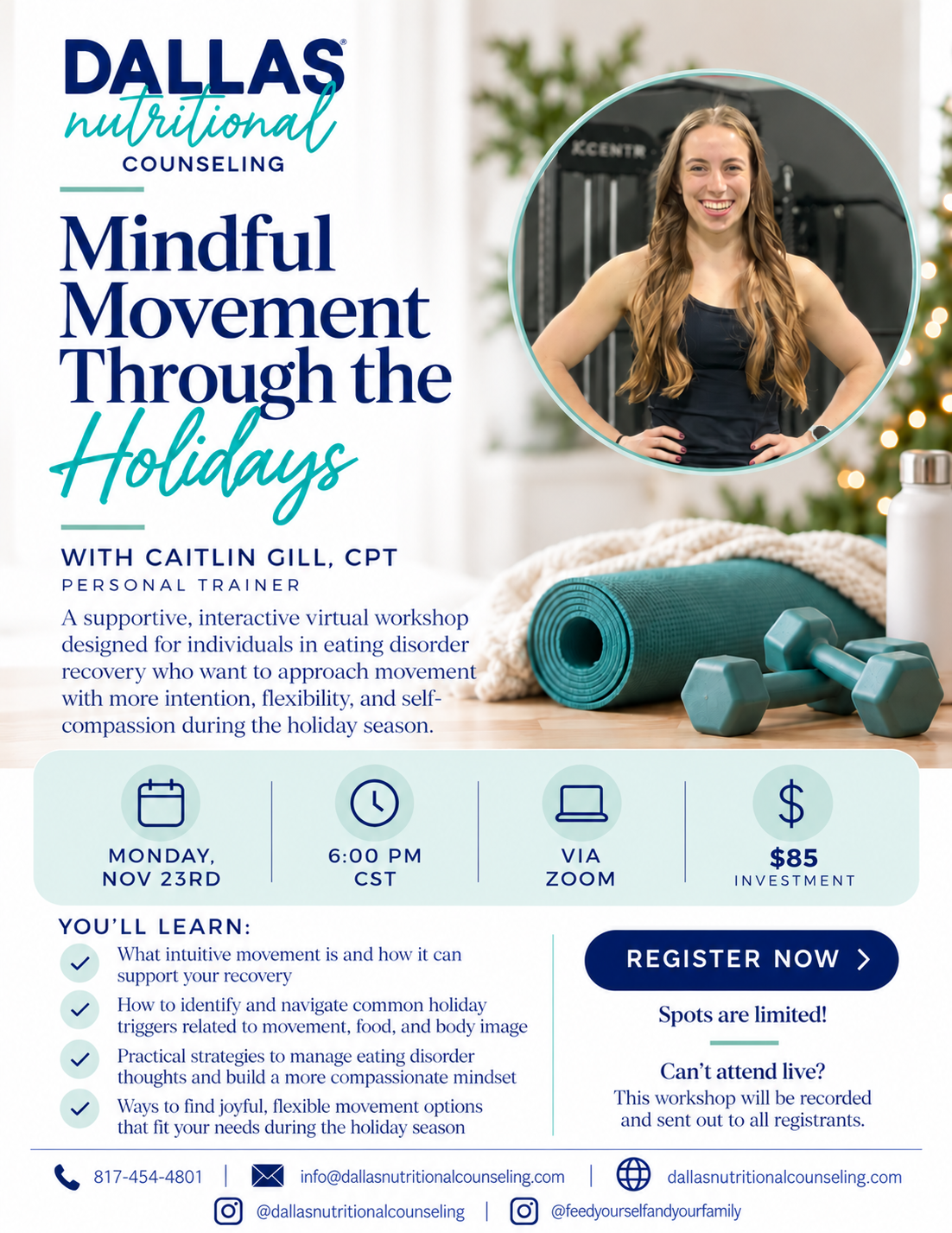
Join us for Mindful Movement Through the Holidays
At Dallas Nutritional Counseling, we recognize that developing a healthier relationship with movement can be an important part of eating disorder recovery.
We're excited to offer Mindful Movement Through the Holidays, a virtual workshop led by personal trainer Caitlin Gill, CPT.
During this supportive, interactive session, participants will explore intuitive movement, identify common holiday triggers, challenge exercise-related guilt, and develop practical strategies for approaching movement with greater flexibility and self-compassion.
Workshop Details:
Monday, November 23, 2026
6:00 PM CST
Virtual via Zoom
Cost: $85
Can't attend live? The workshop will be recorded and sent to all registrants.
Cameras are optional, and participants are welcome to take breaks throughout the session.
You deserve a relationship with movement rooted in choice, compassion, and respect for your body's needs.