Navigating Holiday Exercise Triggers During Eating Disorder Recovery
How to protect your recovery and approach movement with more flexibility and self-compassion this holiday season.
The holiday season can be filled with connection, celebration, and meaningful traditions. But for individuals navigating eating disorder recovery, it can also bring unique challenges, especially when it comes to food, body image, and exercise.
Between changes in routine, family gatherings, travel, and conversations about "staying on track" during the holidays, it's easy for old thoughts and behaviors to resurface.
You may find yourself feeling anxious about missing a workout, guilty about enjoying holiday meals, or pressured to compensate for eating through exercise.
If these feelings sound familiar, you're not alone.
Your recovery doesn't have to take a back seat during the holidays. And movement doesn't have to become another source of stress.
Why the Holidays Can Be Particularly Challenging
During the holidays, we're often surrounded by messages suggesting that we need to balance food with exercise.
You might hear comments like:
"I need to work off everything I ate yesterday."
"I have to get a workout in before the big meal."
"I'll make up for it at the gym tomorrow."
"I can't let myself get out of my routine."
While these comments may seem harmless to others, they can be especially triggering for someone working to heal their relationship with food, movement, and their body.
These messages reinforce the idea that food must be earned or compensated for and that exercise is an obligation rather than a choice.
In eating disorder recovery, challenging these beliefs can be an important part of developing a more peaceful relationship with movement.
Recognizing Your Personal Movement Triggers
Triggers look different for everyone. Becoming aware of the situations, thoughts, and feelings that make movement feel stressful or compulsory can help you respond with greater intention.
Some common holiday-related triggers include:
Changes in routine. Traveling, spending time with family, or having a different schedule may make it difficult to maintain your usual activities. This can bring up anxiety or feelings of losing control.
Conversations about food and exercise. Hearing others discuss calories, workouts, weight, or compensating for holiday meals can reinforce eating disorder thoughts.
Social media messaging. Holiday fitness challenges and messaging about avoiding holiday weight gain can create unnecessary pressure.
Feelings of guilt around rest. Having more downtime may feel uncomfortable if you've developed rigid rules about how often or how intensely you should exercise.
Recognizing these experiences without judgment is an important first step.
Five Ways to Approach Movement More Compassionately This Holiday Season
1. Give yourself permission to be flexible
Your routine may look different during the holidays, and that's okay.
You don't have to maintain the same movement schedule every week. Changes in routine aren't failures, and taking time away from exercise doesn't mean you've done something wrong.
Flexibility is a skill that can be practiced, just like any other part of recovery.
2. Separate movement from food
One of the most important reminders during the holidays is that you don't need to exercise to earn your meals.
Food provides nourishment, and you deserve to eat regardless of whether you've moved your body.
If you notice thoughts about needing to compensate for eating, consider gently challenging them.
You might remind yourself:
I don't need to earn my food.
My body deserves nourishment whether I exercise or not.
Movement is not a punishment for eating.
3. Check in with your intentions
Before choosing to engage in movement, consider asking yourself:
Am I doing this because I genuinely want to?
Am I feeling pressure, guilt, or anxiety about not exercising?
Would rest feel more supportive today?
Am I following a rigid rule, or making a flexible choice?
There aren't always easy answers to these questions. The goal isn't to judge yourself, but to become more curious about the motivations behind your choices.
For individuals in eating disorder recovery, movement decisions should also align with guidance from their treatment team. Sometimes taking a break from exercise is an important part of healing.
4. Create boundaries around triggering conversations
You are allowed to step away from conversations about dieting, weight, or exercise.
You can also practice simple responses such as:
"I'd rather not talk about calories or workouts."
"I'm focusing on taking care of myself in a different way right now."
"Can we talk about something else?"
You don't owe anyone an explanation for protecting your recovery.
5. Remember that rest is valuable
Rest is not something you need to earn.
Whether you're traveling, spending time with loved ones, or simply feeling tired, giving yourself permission to slow down can be an important form of self-care.
Your worth is not determined by how active or productive you are.
You Don't Have to Navigate These Challenges Alone
Learning to approach movement with more flexibility can be difficult, particularly when eating disorder thoughts become louder during stressful or unfamiliar situations.
Having support can make a meaningful difference.
At Dallas Nutritional Counseling, we believe that movement should support your overall well-being rather than create additional guilt, anxiety, or pressure.
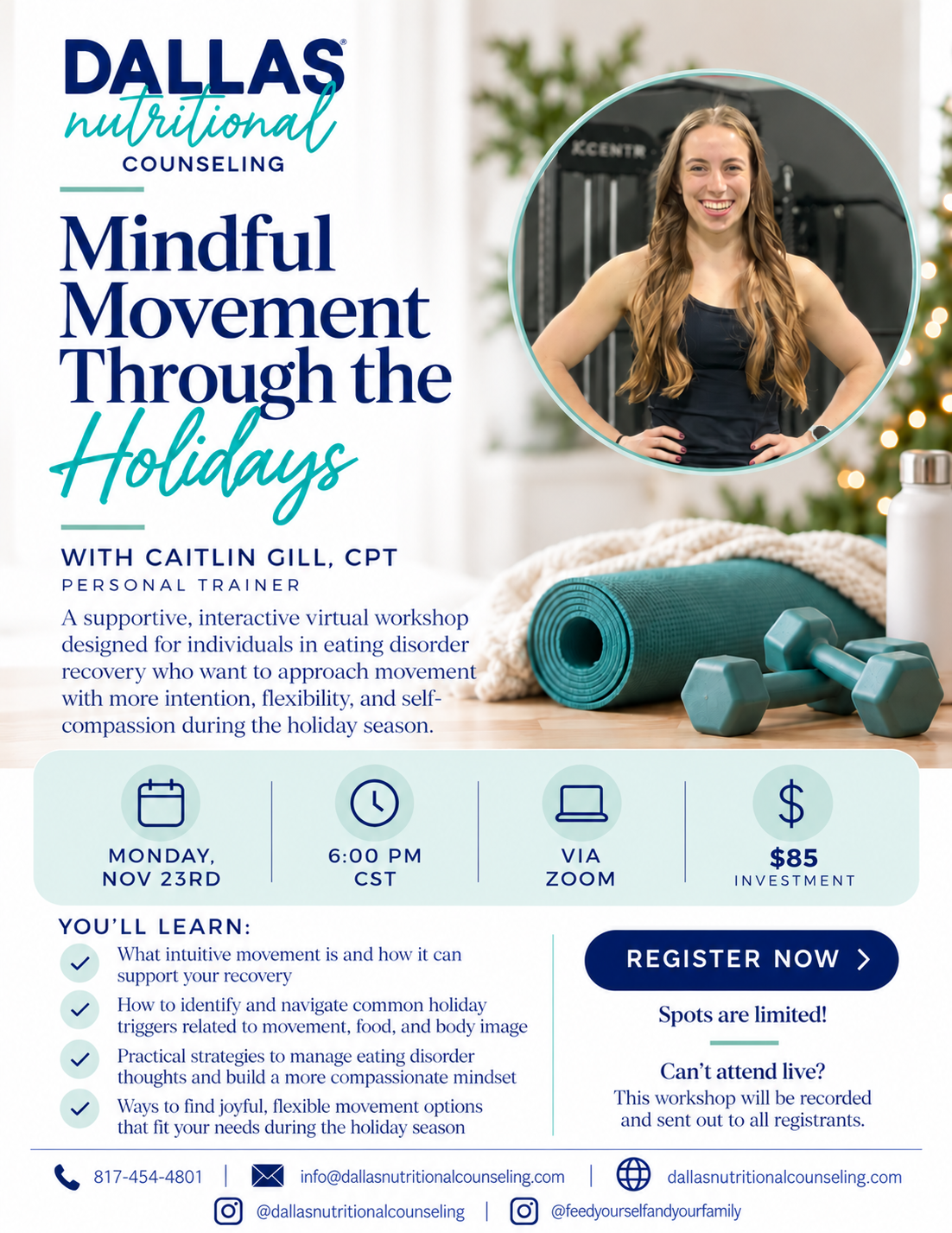
That's why we're offering Mindful Movement Through the Holidays, a virtual workshop with our personal trainer, Caitlin Gill, CPT.
During this interactive workshop, we'll explore:
What intuitive movement is and how it can support recovery
How to identify and navigate common holiday triggers related to movement, food, and body image
Practical strategies for managing eating disorder thoughts and developing a more compassionate mindset
Ways to explore joyful, flexible movement options that respect your individual needs
Join Us: Mindful Movement Through the Holidays
Monday, November 23, 2026
6:00 PM CST | Virtual via Zoom
Cost: $85
Can't attend live? The workshop will be recorded and sent to all registrants.
Whether you're working on challenging exercise guilt, developing more flexibility, or simply learning to listen to your body's needs, this workshop offers a supportive space to explore a different relationship with movement.
You deserve to experience the holidays without feeling that you need to earn your food, justify your rest, or change your body.