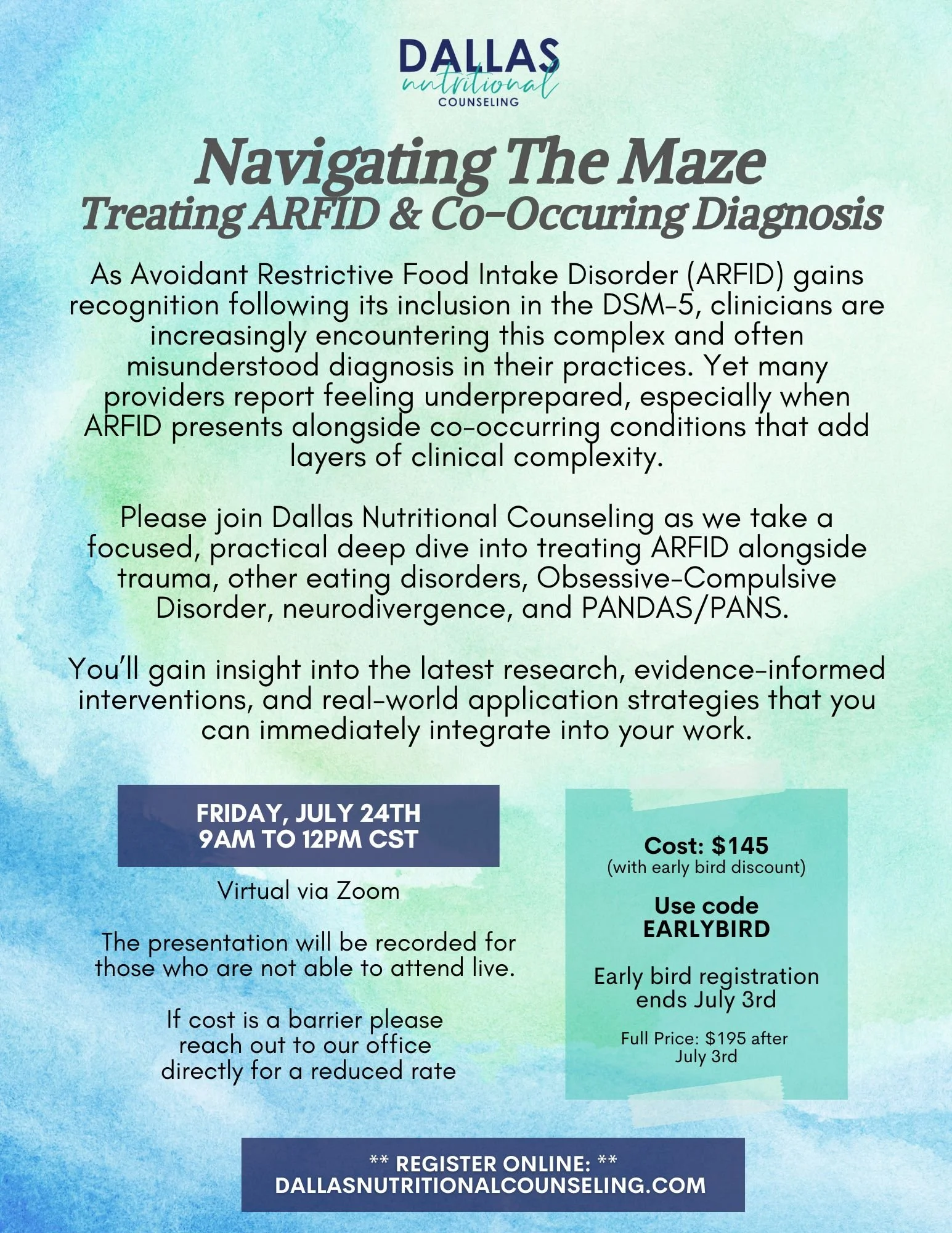
Navigating the Maze: Treating ARFID and Co-Occurring Diagnoses
As awareness of Avoidant/Restrictive Food Intake Disorder (ARFID) continues to grow, clinicians across disciplines are increasingly encountering this complex eating disorder in their practices. While ARFID was formally recognized in the DSM-5 over a decade ago, many providers still report feeling underprepared to address the unique challenges it presents—especially when it occurs alongside other mental health, developmental, or medical conditions.
To help bridge this gap, Dallas Nutritional Counseling is excited to offer a specialized professional workshop, “Navigating the Maze: Treating ARFID & Co-Occurring Diagnoses,” designed for clinicians seeking practical, evidence-informed guidance for treating this often misunderstood population.
Why ARFID Requires a Specialized Approach
Unlike other eating disorders, ARFID is not driven by concerns about body weight or shape. Instead, individuals may avoid or restrict food due to sensory sensitivities, fear of aversive consequences such as choking or vomiting, low appetite, or a combination of factors. This complexity is often compounded by the presence of co-occurring conditions, making assessment and treatment far more nuanced.
Providers frequently encounter ARFID alongside:
Trauma and PTSD
Other eating disorders
Obsessive-Compulsive Disorder (OCD)
Neurodivergence, including autism and ADHD
PANS/PANDAS
Anxiety disorders and other mental health concerns
Understanding how these conditions interact is critical for developing effective treatment plans and avoiding interventions that may unintentionally hinder progress.
What Participants Will Learn
This workshop is designed to move beyond theory and provide clinicians with actionable tools they can immediately apply in their practices.
Attendees will gain:
A Deeper Understanding of ARFID
Explore current research on ARFID, including diagnostic considerations, common presentations, and the latest evidence-based treatment approaches.
Strategies for Complex Cases
Learn how to conceptualize and treat ARFID when it presents alongside trauma, OCD, neurodivergence, and other co-occurring diagnoses that influence food-related behaviors.
Practical Clinical Applications
Discover real-world interventions, treatment planning strategies, and multidisciplinary approaches that can improve outcomes for clients and families.
Increased Clinical Confidence
Walk away with a stronger framework for assessing and treating ARFID, helping you feel more equipped to navigate challenging cases with confidence.
Who Should Attend?
This workshop is ideal for:
Registered Dietitians
Therapists and Counselors
Psychologists
Physicians and Nurse Practitioners
Occupational Therapists
Students and trainees interested in eating disorder treatment
Any professional working with individuals experiencing ARFID
Whether you are new to treating ARFID or looking to deepen your expertise, this training offers valuable insights for clinicians at every level.
Workshop Details
Date: Friday, July 24
Time: 9:00 AM – 12:00 PM CST
Format: Virtual via Zoom
For those unable to attend live, the presentation will be recorded, allowing participants to access the material at a later time.
Early Bird Registration Available
Participants can take advantage of an early bird registration rate of $145 by using the code EARLYBIRD before July 3. After the early bird deadline, registration will increase to $195.
Dallas Nutritional Counseling is committed to making education accessible. If cost presents a barrier, clinicians are encouraged to contact the office directly to discuss reduced-rate options.
Join Us
Treating ARFID is rarely straightforward. When additional diagnoses enter the picture, clinicians often find themselves navigating a maze of overlapping symptoms, treatment considerations, and competing clinical priorities.
This workshop was created to provide clarity, practical guidance, and evidence-based strategies for working with these complex cases. If you’re looking to strengthen your understanding of ARFID and improve your ability to support clients with co-occurring conditions, we invite you to join us for this engaging and informative training experience.
We look forward to learning with you as we continue advancing compassionate, effective care for individuals living with ARFID.