ADHD-Friendly Nutrition: Tips and Tools for Meal Planning, Food Prep, and Consistent Nourishment
For many people with Attention-Deficit/Hyperactivity Disorder (ADHD), eating well isn’t simply about knowing what foods are nutritious. Executive functioning challenges can make meal planning, grocery shopping, food preparation, and remembering to eat feel overwhelming. As a result, many individuals with ADHD find themselves skipping meals, relying on convenience foods, experiencing periods of under-eating followed by overeating, or struggling to maintain consistent nutrition throughout the day.
The good news is that nutrition doesn’t require perfect organization or elaborate meal prep. Creating systems that work with your brain—not against it—can make nourishing yourself much more manageable.
Understanding Executive Functioning and Nutrition
Executive functioning refers to the mental skills that help us plan, organize, initiate tasks, manage time, prioritize, and follow through. Many people with ADHD experience difficulties in these areas, which can directly impact eating habits.
Common challenges include:
Forgetting to eat until becoming overly hungry
Difficulty planning meals in advance
Feeling overwhelmed by grocery shopping
Struggling to start cooking tasks
Underestimating the time needed to prepare meals
Losing track of ingredients before they are used
Difficulty transitioning away from work or activities to eat
Recognizing these challenges as executive functioning barriers—not a lack of motivation—is often the first step toward finding effective solutions.
Simplify Meal Planning
One of the biggest mistakes people make is creating meal plans that are too complicated.
Instead of planning 21 unique meals every week, focus on building a rotation of familiar favorites.
Create a “Go-To” Meal List
Keep a running list of:
2-3 breakfast options
2-3 lunch options
2-3 dinner options
Easy snacks
When planning your week, simply choose from your existing list rather than starting from scratch.
Use Theme Nights
Assign categories to specific days:
Monday: Pasta
Tuesday: Taco Night
Wednesday: Sheet Pan Meal
Thursday: Breakfast for Dinner
Friday: Takeout or Leftovers
This reduces decision fatigue and makes meal planning feel more automatic.
Reduce Barriers to Eating
For many individuals with ADHD, the easiest meal is often the one that gets eaten.
Consider keeping convenient options readily available:
No-Prep Protein Sources
Greek yogurt
Cottage cheese
Protein shakes
String cheese
Rotisserie chicken
Hard-boiled eggs
Tuna packets
Grab-and-Go Carbohydrates
Bread
Tortillas
Crackers
Granola bars
Oatmeal packets
Frozen waffles
Easy Produce
Baby carrots
Pre-cut fruit
Apples
Grapes
Frozen vegetables
Salad kits
Remember: convenience foods can absolutely be part of a balanced diet.
Make Food Visible
People with ADHD often struggle with “out of sight, out of mind.”
Try these strategies:
Store ready-to-eat foods at eye level.
Place fruit in visible bowls on the counter.
Use clear storage containers.
Keep frequently used snacks in an easy-to-access location.
Post a simple meal list on the refrigerator.
Making food more visible can reduce the mental effort required to remember what is available.
Use Technology to Your Advantage
Technology can act as an external executive functioning support system.
Helpful tools include:
Digital Reminders
Set recurring alarms for:
Breakfast
Lunch
Afternoon snack
Dinner
Many people with ADHD become deeply focused on tasks and may not notice hunger cues until much later.
Grocery Apps
Apps that save shopping lists and allow reordering can reduce decision-making and planning time.
Calendar Blocking
Schedule meal times into your calendar just like meetings or appointments.
Treating meals as important commitments can improve consistency.
Create ADHD-Friendly Food Prep Systems
Traditional meal prep doesn’t work for everyone.
Rather than spending hours cooking an entire week’s worth of meals, consider “ingredient prep.”
Examples include:
Washing fruit
Chopping vegetables
Cooking a batch of rice
Grilling chicken
Portioning snacks into containers
Having components ready often feels less overwhelming than preparing complete meals.
Build an Emergency Food Toolkit
Everyone has days when cooking feels impossible.
Create a collection of emergency meals that require minimal effort.
Ideas include:
Frozen meals
Soup and crackers
Peanut butter toast
Cereal and milk
Protein shakes
Frozen burritos
Rotisserie chicken with microwave rice
Having backup options can prevent skipped meals and reduce stress.
Pair Eating with Existing Habits
Habit stacking can be particularly effective for ADHD.
Try pairing meals or snacks with routines you already do consistently:
Eat breakfast after brushing your teeth.
Have a snack when checking email.
Eat lunch immediately after a recurring meeting.
Enjoy an afternoon snack before school pickup.
Connecting nutrition to established habits reduces the need to rely on memory alone.
Let Go of Perfection
Many people with ADHD struggle with all-or-nothing thinking. If meal planning doesn’t happen perfectly, it can feel tempting to abandon the effort altogether.
Instead, focus on consistency over perfection.
A frozen meal is better than skipping dinner.
A protein bar is better than going six hours without eating.
A simple sandwich is still a balanced meal.
Small, sustainable habits often lead to greater success than elaborate systems that are difficult to maintain.
Working with a Dietitian
For individuals with ADHD, nutrition support often extends beyond discussing food choices. A dietitian who understands executive functioning challenges can help develop realistic strategies for meal planning, grocery shopping, food preparation, and consistent nourishment.
The goal isn’t to create the perfect meal plan. The goal is to build systems that make eating easier, more predictable, and less stressful—allowing you to spend less mental energy thinking about food and more energy living your life.

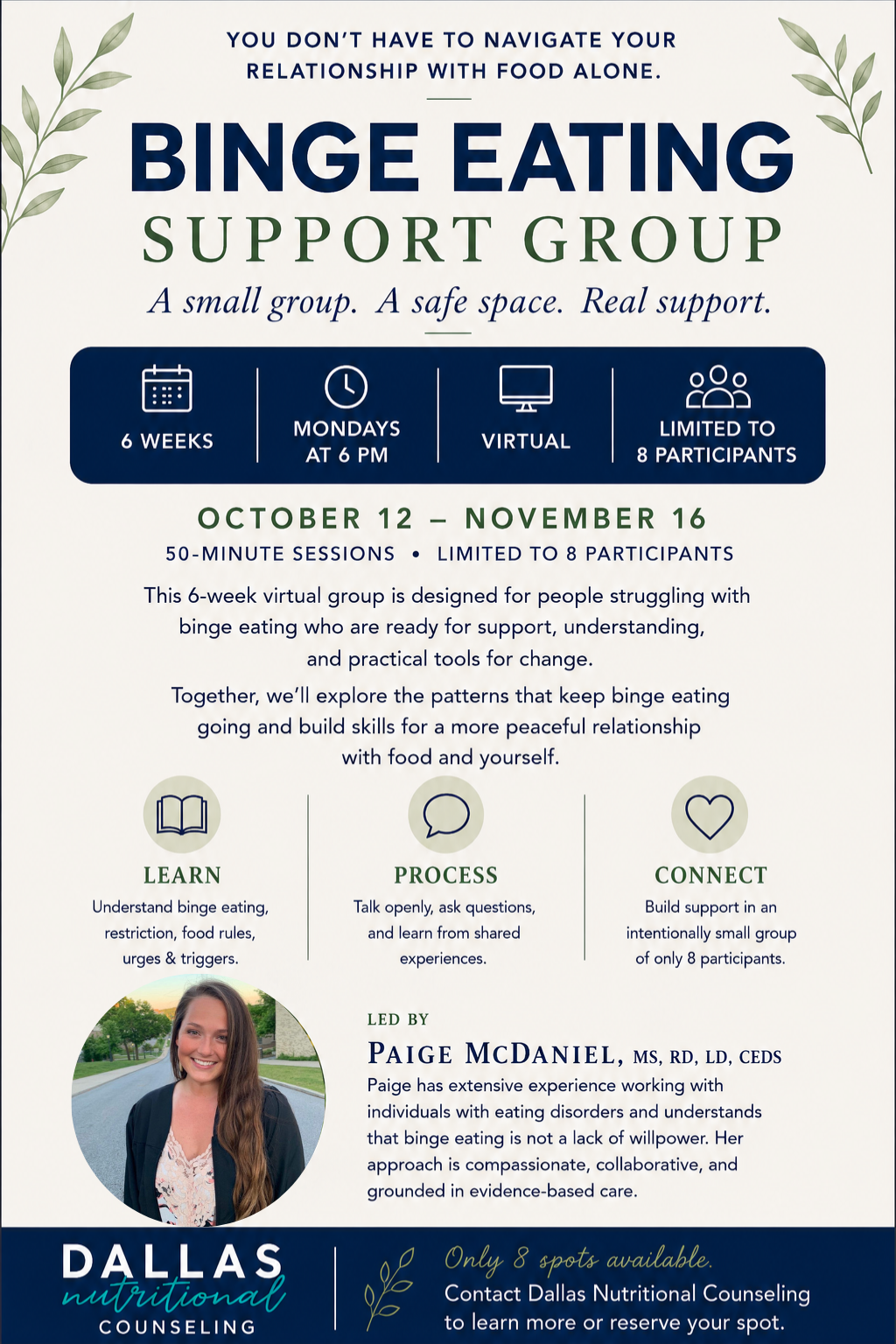
We’re excited to share some wonderful news: Megan Good, RD, LD, CEDS, is returning from maternity leave and is now accepting new patients at Dallas Nutritional Counseling!