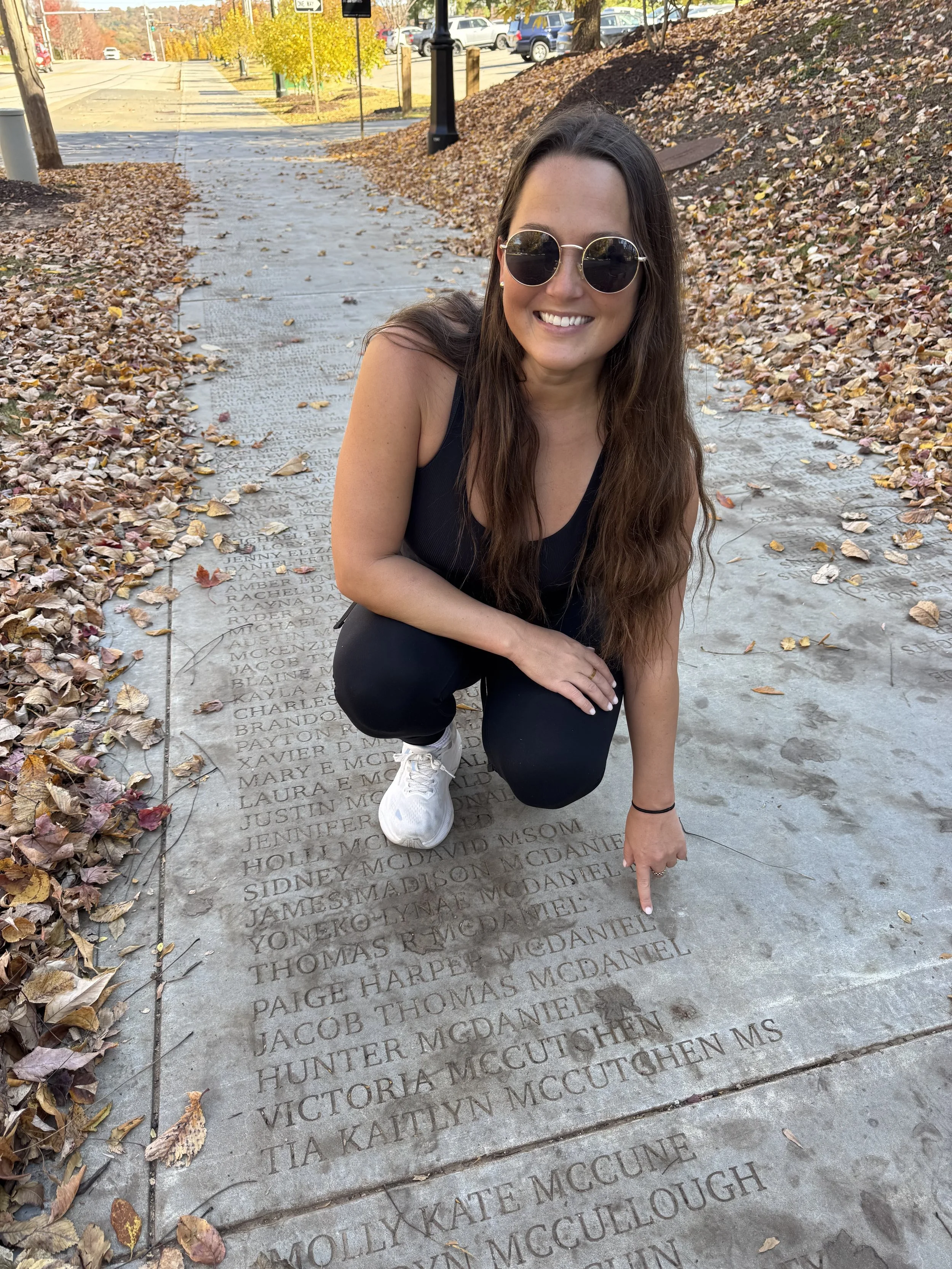
meet paige mcdaniel
MS, RD, LD, CEDS
registered Dietitian

Paige McDaniel, MS, RD, LD, CEDS
Registered Dietitian | Certified Eating Disorders Specialist
Paige McDaniel is a registered and licensed dietitian and Certified Eating Disorders Specialist who works with adolescents and adults experiencing eating disorders, disordered eating, and complicated relationships with food.
Paige has a particular ability to connect with adolescents and young adults—including the ones who aren't exactly excited about coming to nutrition counseling.
Warm, direct, and highly relatable, Paige brings a relaxed presence to sessions that can make nutrition counseling feel less intimidating. She understands that not every client walks through the door ready for recovery, convinced they need help, or interested in talking to another adult about what they're eating.
Rather than expecting immediate buy-in, Paige focuses on building trust, understanding where a client actually is, and creating a relationship where honest conversations about food and recovery can gradually happen.
Combined with extensive experience across higher levels of eating disorder care, Paige brings both significant clinical expertise and an approachable presence to her work.
Connecting With Teens—Even When They Don't Want to Be Here
Eating disorder treatment can be particularly complicated for adolescents. Sometimes a teen recognizes that they're struggling and wants help. Other times, parents, doctors, or treatment teams are far more concerned than the teen is. Paige is comfortable with both.
She doesn't expect adolescents to walk into her office knowing what they want to change—or even agreeing that something needs to change. Her relaxed, conversational style helps take some of the pressure out of the room, while her directness allows her to be honest when she has concerns.
Paige works to understand a teen's perspective rather than immediately turning the session into another place where they're being told what to do. Her ability to relate to adolescents and young adults helps her build rapport without trying to take on a parental role.
Over time, that relationship can create room for more honest conversations about food, eating disorder behaviors, body image, exercise, school, friends, independence, and the many other things that can affect recovery during adolescence.
Extensive Eating Disorder Treatment Experience
Before joining Dallas Nutritional Counseling, Paige spent four years working in specialized eating disorder treatment.
Her experience spans inpatient, residential, partial hospitalization (PHP), and intensive outpatient (IOP) levels of care, giving her experience with eating disorders ranging from medically and nutritionally acute presentations to clients preparing to transition back into everyday life.
Paige has worked with anorexia nervosa, bulimia nervosa, binge eating disorder, ARFID, OSFED, restrictive eating, and other forms of disordered eating.
Working across levels of care also gave her experience with the medical complexity that can accompany eating disorders and the importance of collaboration among dietitians, physicians, therapists, psychiatrists, nurses, families, and other members of the treatment team.
Today, Paige brings that higher-level-of-care experience into outpatient treatment, where the challenge often shifts from following a highly structured treatment program to figuring out how recovery works at home, at school, with friends, in restaurants, during activities, and in everyday life.
Binge Eating Without Shame or Judgment
Paige has a particular interest in working with binge eating disorder and binge eating behaviors and works with both adolescents and adults experiencing binge eating concerns.
She has also facilitated an adult binge eating group through Dallas Nutritional Counseling, providing a space for participants to better understand binge eating patterns, reduce shame around food, and develop a more flexible and supportive approach to eating.
Paige understands that binge eating isn't simply a matter of willpower or needing more control around food.
Instead, she helps clients become curious about the larger patterns surrounding their eating. Restriction, inconsistent nutrition, rigid food rules, emotional experiences, stress, body dissatisfaction, dieting, and other factors can all contribute to a cycle of feeling out of control around food.
Paige works with clients to understand those patterns without adding more shame or another set of restrictive rules.
Depending on the individual, her work may include establishing more consistent nutrition, challenging food rules, understanding physical and emotional hunger, increasing flexibility around previously forbidden foods, developing additional coping strategies, and learning to respond to difficult eating experiences with curiosity rather than punishment.
Supporting Adolescents Means Supporting Families
When an adolescent is struggling with an eating disorder, nutrition counseling rarely involves only the adolescent.
Parents and caregivers are often responsible for buying groceries, preparing meals, providing structure, responding to eating disorder behaviors, communicating with treatment providers, and trying to determine how much support their child needs, all while managing their own worry and uncertainty.
Paige provides both individual and family nutrition counseling and helps parents understand how they can support recovery outside of appointments.
She recognizes that an adolescent's growing need for independence and a family's responsibility to support adequate nutrition can sometimes feel at odds.
Her role is not to automatically take the parent's side or the teen's side. It's to help everyone better understand what the eating disorder needs, what the adolescent needs, and what may help move recovery forward.
Flexibility Around Food
Across diagnoses, one of Paige's central goals is helping clients develop greater flexibility around food.
Eating disorders can make life increasingly small. Certain foods become unacceptable. Portions become rigid. Restaurants become stressful. Plans become difficult to change. Social events revolve around what will be served. Eating can begin to require an exhausting amount of thought and preparation.
Paige's work may include meal support, food exposures, challenging fear foods, increasing variety, practicing flexibility with portions and plans, and helping clients tolerate the uncertainty that can accompany eating differently.
The goal isn't simply to complete an exposure in her office.
It's for clients to gradually have more freedom to participate in the rest of their lives.
Working With Paige
Paige is warm and compassionate, but she isn't afraid to be direct.
Her sessions tend to have a relaxed, conversational feel. She has a natural ability to connect with clients without making every interaction feel overly clinical, which can be especially valuable for adolescents and young adults who are skeptical about treatment or tired of feeling like every adult in their life is monitoring them.
Being relatable doesn't mean avoiding difficult conversations. Paige can name an eating disorder behavior, express concern, or challenge a client while maintaining the relationship and giving them room to have their own reaction.
She is also comfortable with ambivalence. Clients don't have to convince Paige that they're excited about recovery before meaningful work can begin.
Her higher-level-of-care experience means that this relaxed style is backed by a strong understanding of eating disorder severity, medical and nutritional risk, and when additional support may be needed.
Paige can connect with the teenager sitting across from her while still seeing the larger clinical picture.
Areas of Expertise
Adolescents and teens
Young adults and adults
Anorexia nervosa and restrictive eating disorders
Bulimia nervosa
Binge eating disorder and binge eating behaviors
ARFID
OSFED and disordered eating
Chronic dieting and orthorexia
Medically complex eating disorders
Higher levels of eating disorder care
Family nutrition counseling and caregiver support
Meal support
Food and meal exposures
Fear foods and increasing flexibility
Body image and body neutrality
Intuitive Eating
Compulsive exercise
Multidisciplinary treatment-team collaboration
Eating disorder group facilitation
Education & Credentials
Paige earned her Bachelor's Degree in Nutrition and Dietetics from the University of Arkansas and returned to Texas to complete her dietetic internship and master's program at Texas Woman's University.
She is a Registered and Licensed Dietitian and Certified Eating Disorders Specialist (CEDS).
Scheduling With Paige
Paige offers after-school and evening appointment availability, which can make ongoing nutrition counseling more manageable for students and families balancing school, extracurricular activities, work, and other commitments.